
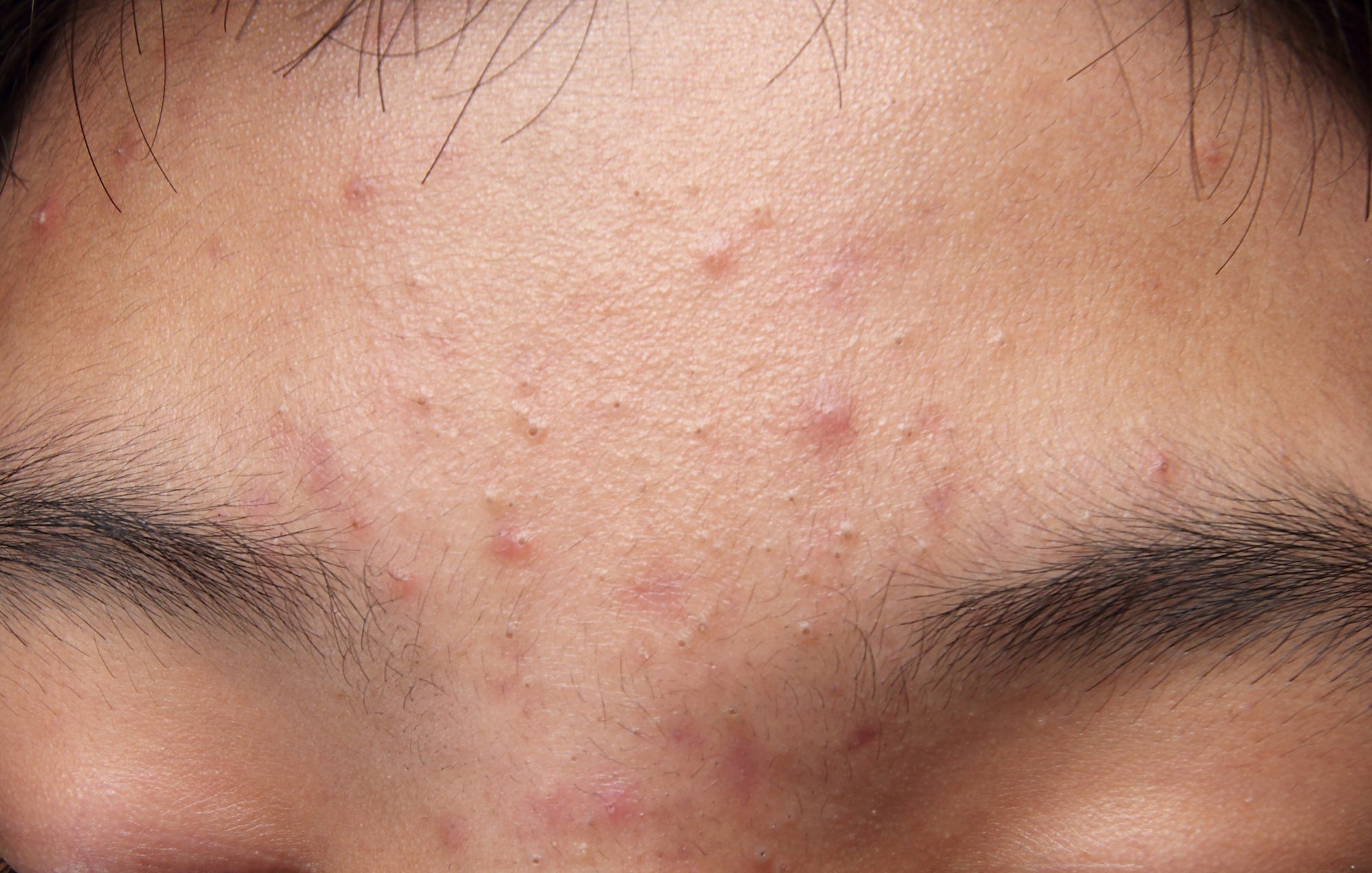
Why Skin Gets Oily and Dehydrated at the Same Time
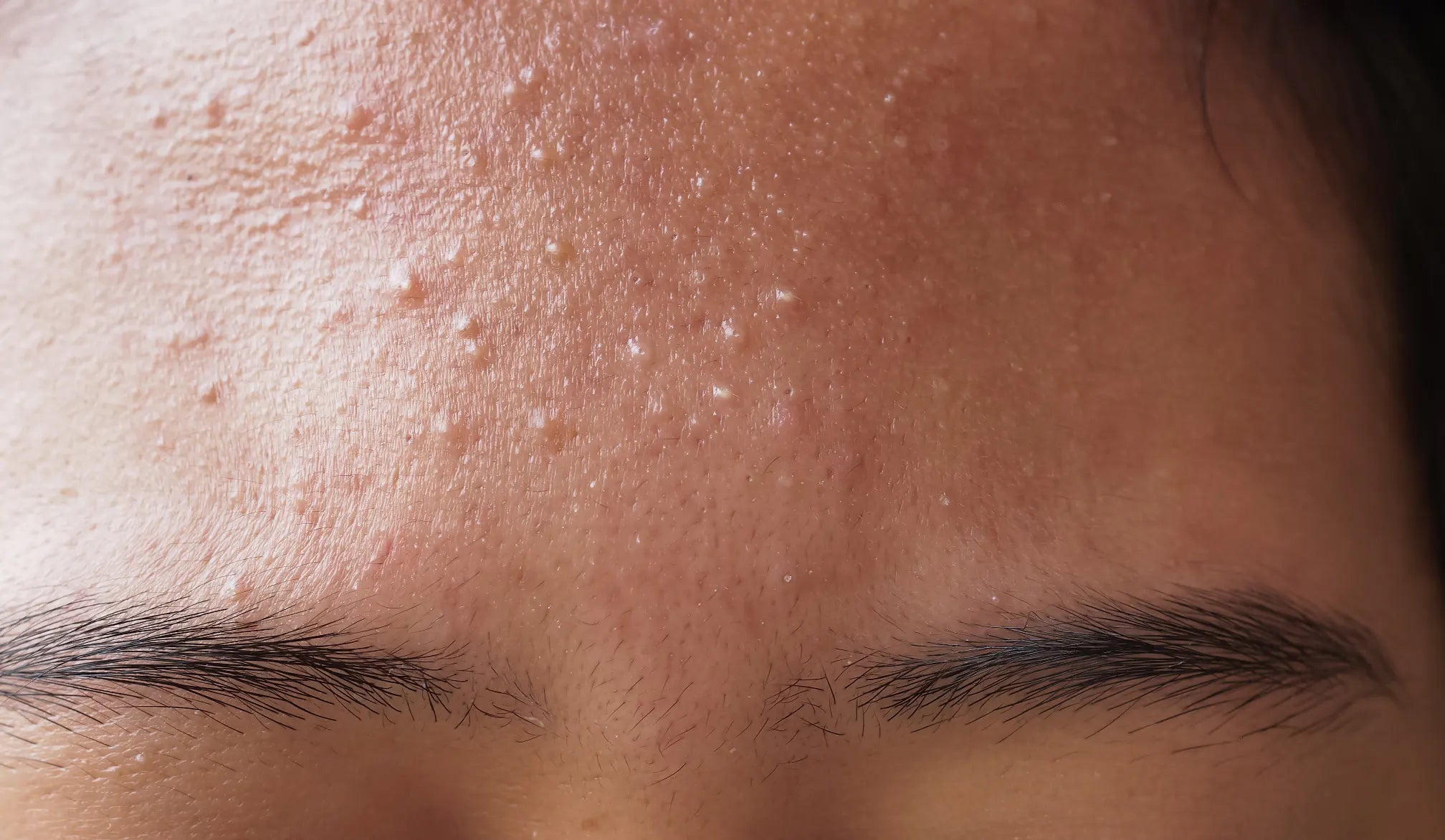
Quick answer: Oily and dehydrated at the same time isn't a contradiction, it's a feedback loop. When your moisture barrier gets weak, water escapes too fast, and your skin reacts by pumping out extra oil to seal the surface. That's why you end up shiny on top and tight underneath. You've got too much oil and not enough water all at once. Sort out the barrier and the oil usually calms down on its own.
Oil and water are two totally separate systems

If you already know oily and dehydrated aren't the same thing, here's the part that actually matters. They're run by completely different machinery, which is exactly why you can max out both at the same time.
Your oil comes from sebaceous glands, and how much you make is mostly down to hormones and genetics. Think of it as a production line that's always running. Hydration is a different story. That's the water sitting in the very top layer of your skin, and it depends entirely on how well your barrier holds moisture in. So "oily but dehydrated" just means your oil glands are running hot while your barrier is quietly leaking. Slathering on more oil does nothing for the water evaporating out underneath.
Your barrier is a brick wall, and yours is low on mortar
Picture the top layer of your skin as a brick wall. The skin cells are the bricks, and a blend of fats holds it all together like mortar. That mortar is mostly ceramides, cholesterol, and fatty acids in a fairly specific balance. When you throw that balance off by over-washing, over-exfoliating, or piling on strong actives, the mortar starts to crumble and water slips out through the gaps. Skin scientists actually measure this and call it transepidermal water loss, or TEWL for short. High TEWL is basically the technical fingerprint of dehydrated skin.
Here's the annoying part. Your oil glands read a leaky barrier as an emergency and crank up production to compensate. So the harder you strip your skin, the more you damage that mortar, the more water you lose, and the more oil your skin makes to fight back. That squeaky, tight feeling right after you wash? That's not your skin getting clean. That's your barrier waving a little white flag.
Why "just use something stronger" makes it worse
Most acne routines are built to strip oil at any cost. Foaming cleansers that leave you squeaky, acids every single day, drying spot treatments layered on top of all of it. For skin that already has a struggling barrier, that's about the worst plan you can pick. The point was never to punish your skin into behaving. It's to rebuild that mortar and let the whole panic cycle settle down. That's the thinking behind how we formulate at Smood. We choose ingredients for what they actually do, not for how aggressive they feel going on.
The ingredients that actually break the cycle
A gentler way to clear pores: Betaine Salicylate

You really can decongest your pores without wrecking your barrier in the process. Our Calm Me Down Antioxidant Cleanser uses Betaine Salicylate, a BHA that comes from an amino acid called betaine. Like regular salicylic acid, it's oil-soluble, so it can get down into oily pores instead of just sitting on the surface where it can't do much. The difference is that it tends to be a lot less irritating on sensitive skin than straight salicylic acid. Add in soothing ingredients like Centella, oat, and green tea, and you clear out congestion without that stripped, tight aftermath.
Niacinamide, and why we use 4% instead of 10%
Niacinamide is one of those rare ingredients that helps on both sides of this problem. It supports your skin's own ceramide production, which rebuilds the mortar, and it helps dial back excess oil. More isn't better, though. The research lands the sweet spot for keeping skin calm somewhere in the low single digits up to around 5%. Push it much higher and you mostly just raise your chances of flushing and irritation without much extra benefit to show for it. Our Problem Solver Gel-Cream Moisturizer sits at 4% for exactly that reason, with ceramides added in to patch the mortar directly.

Hyaluronic acid is great, but it needs a wingman
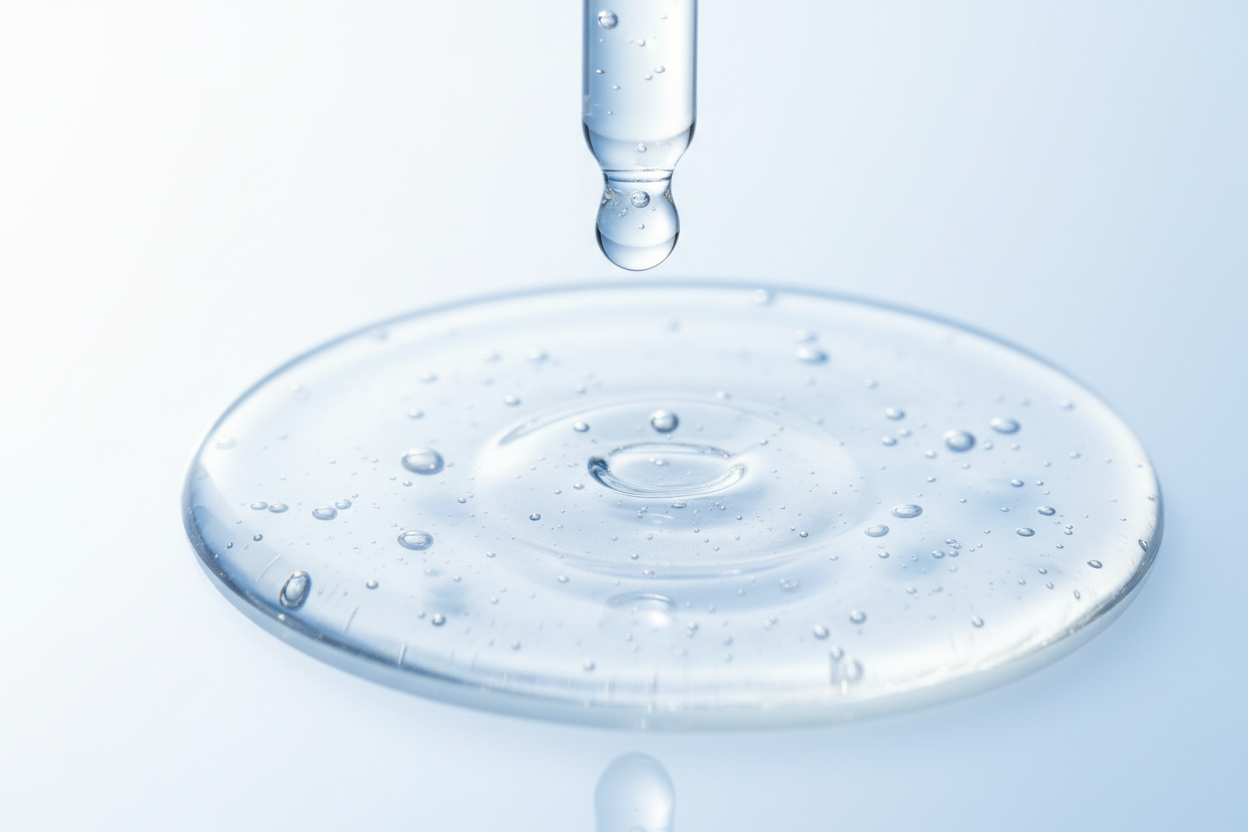
Hyaluronic acid is a humectant, which is a fancy way of saying it grabs onto water. Here's the bit most people miss. In dry air, if there's nothing on top to seal it in, HA can actually pull moisture out of the deeper layers of your skin and let it evaporate, leaving you more dehydrated than when you started. That's why it should always go underneath something that slows water loss. The moisturizer uses six different weights of hyaluronic acid so it hydrates at a few depths at once, all in a light gel-cream that seals everything in without feeling heavy or greasy on acne-prone skin.
So what actually fixes it
Repair first, then rebalance. Swap the squeaky foaming cleanser for something gentle that still keeps your pores clear. Rebuild the mortar twice a day with ceramides, niacinamide, and hydration your barrier can actually hold onto. Then, and this is the tough one for most of us, back off for two or three weeks. Pause the daily acids and give your skin room to recover. People are genuinely surprised by how much calmer, and how much less oily, their skin gets once they stop forcing it. When you do bring actives back, go slow. A couple of nights a week, and only once your skin feels stable again.

Frequently asked questions
How do I tell dehydration apart from actual dryness?
Dryness is a lack of oil, and it's a skin type. It tends to feel flaky and rough pretty much all the time and rarely looks shiny. Dehydration is a lack of water, and it's a temporary state that can hit any skin type, oily included. A shiny T-zone with tight cheeks, plus makeup clinging to dry patches, usually points to dehydration.
Does niacinamide really cancel out vitamin C?
Nope. That myth traces back to studies from the 1960s that used raw, heat-exposed niacin (which isn't the same as niacinamide) under lab conditions you'll never recreate on your face. In real modern formulas, the two get along just fine.
Can I actually shrink my pores?
Not permanently. Pore size is mostly genetic and tied to how much oil you produce. But keeping them clear and bringing down oil output makes them look noticeably smaller, which is usually what people are really after anyway.
Is this purging or just breaking out?
Purging only happens when you start something that speeds up cell turnover, like an exfoliating acid or a retinoid. It shows up in the spots you normally break out, and it clears within about one skin cycle, so roughly four to six weeks. If you're getting new bumps in new places, or from a plain hydrating product, that's irritation, not purging.
Want a routine built around how your skin actually behaves? The Smood Experience Kit is gentle, barrier-first skincare made for acne-prone sensitive skin.

Leave a comment
This site is protected by hCaptcha and the hCaptcha Privacy Policy and Terms of Service apply.