
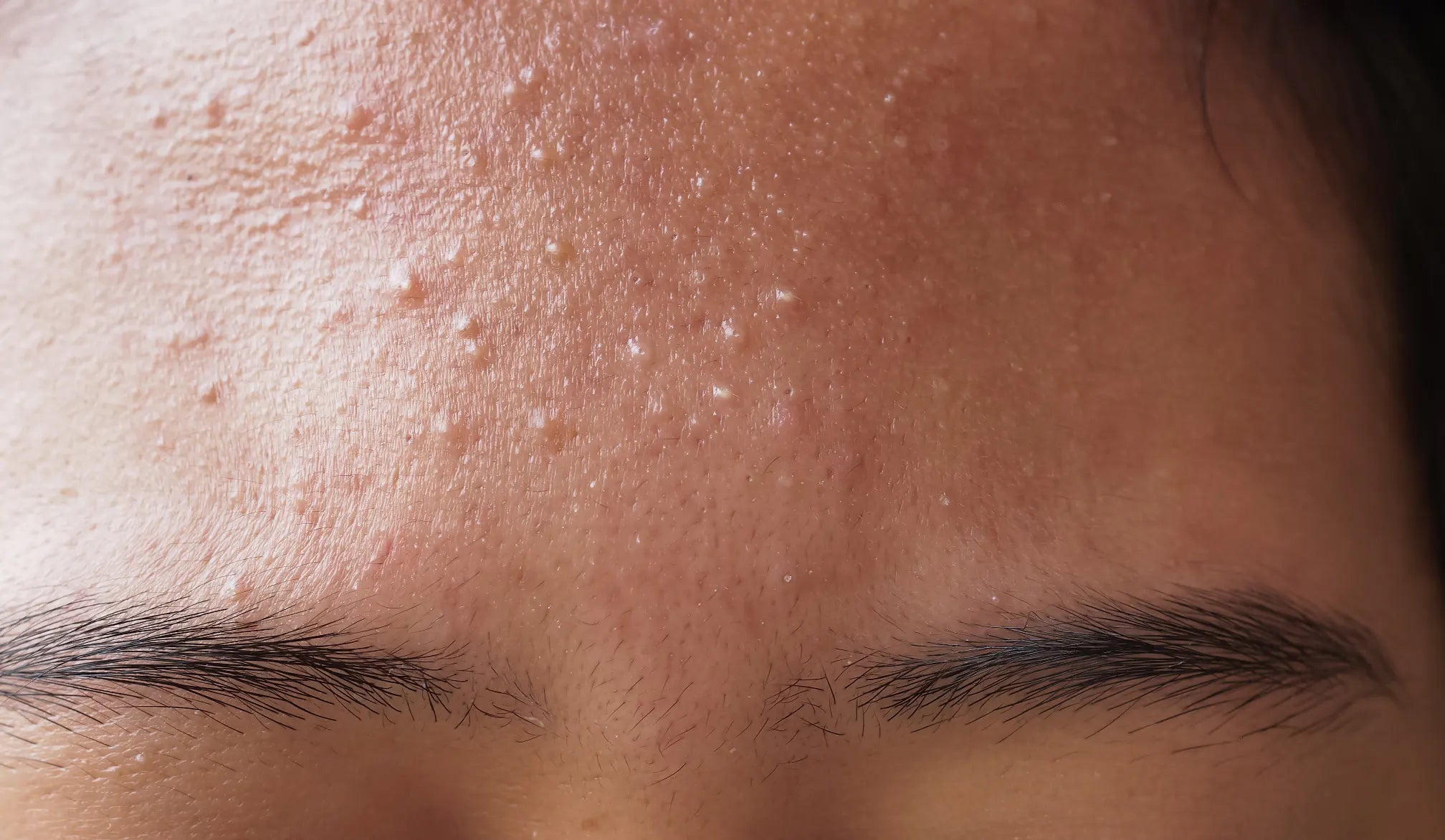
Fungal Acne: Why Those Tiny Bumps Won't Budge
Quick answer: If you have a cluster of tiny, uniform, sometimes itchy bumps that just won't clear no matter how many acne products you throw at them, it might not be acne at all. Fungal acne is actually a yeast issue, which is exactly why your usual spot treatments do nothing.
It's one of the most misdiagnosed skin complaints out there. People spend months treating fungal acne like regular breakouts, get frustrated when nothing works, and assume their skin is just being difficult. The real problem is that they're solving the wrong puzzle.

So what actually is fungal acne?
The proper name is malassezia folliculitis, and that name tells you everything. Malassezia is a type of yeast. Folliculitis means inflammation of the hair follicles. Put them together and you get follicles that are irritated by an overgrowth of yeast, not clogged by oil and bacteria the way true acne is.
Here's the part that surprises people: malassezia lives on everyone's skin, all the time. It's a normal resident. It only becomes a problem when conditions let it multiply faster than your skin would like, and it sets up shop down in the follicle.
Because the trigger is yeast rather than the usual acne process, the whole thing looks and behaves a little differently.
How to tell it apart from regular acne
A few tells that point toward fungal acne rather than the standard kind:
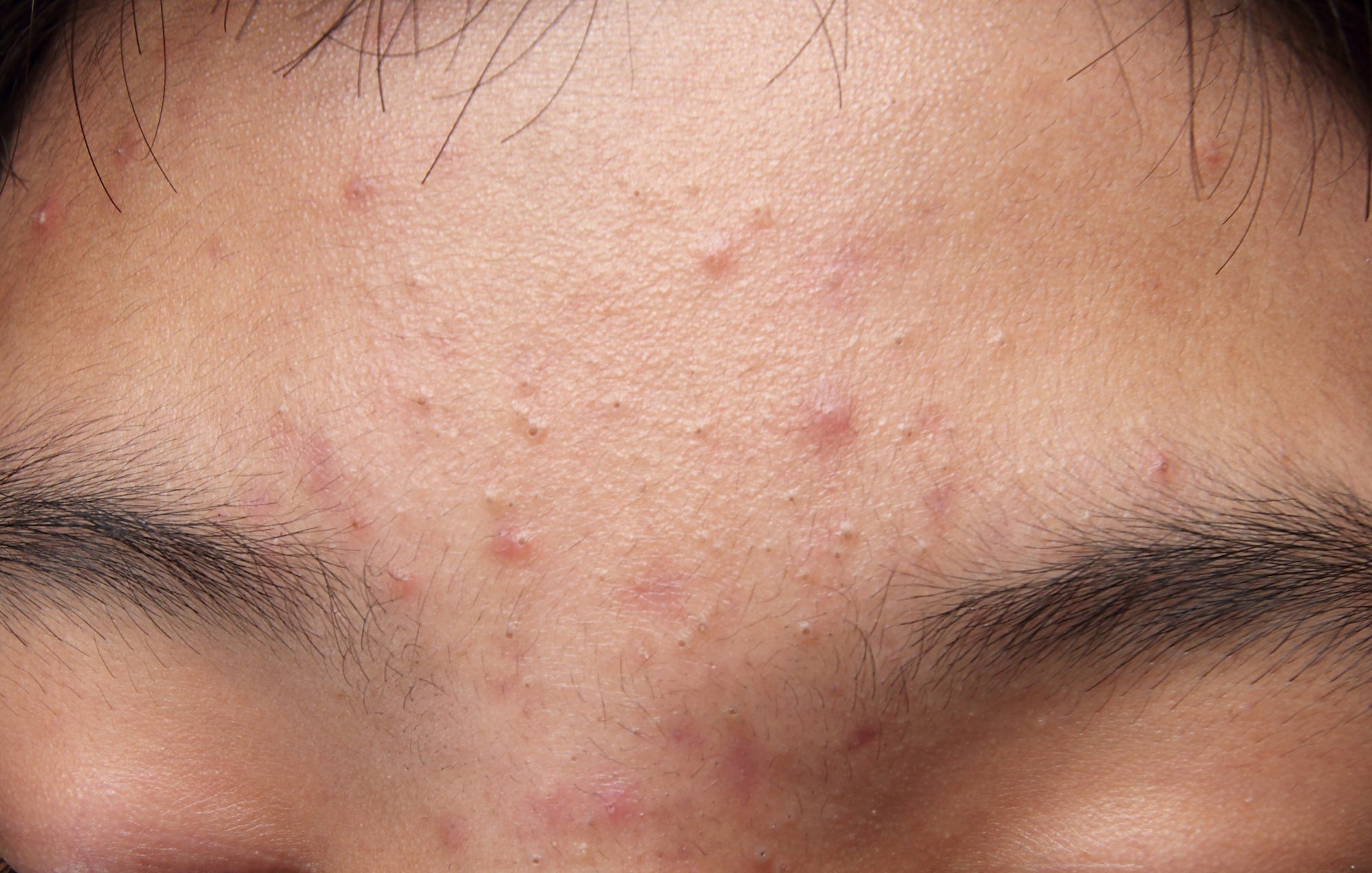
- Uniformity. The bumps tend to be small and all roughly the same size, like a sprinkle of similar dots, rather than the mix of blackheads, whiteheads, and bigger inflamed spots you get with regular acne.
- Location. It loves the forehead and hairline, the sides of the face, the chest, the upper back, and the shoulders. Anywhere warm, a bit sweaty, and rich in oil glands.
- Itch. True acne rarely itches. Fungal acne often does, especially after you sweat.
- It ignores your acne routine. This is the big one. If weeks of dedicated acne treatment have done nothing, that's a strong hint you're dealing with something else.
The mechanism: why yeast gets out of hand
This is where it gets genuinely interesting, and where the solution starts to make sense.
Malassezia is what's called a lipophilic yeast. In plain terms, it's an oil lover. It can't make its own fatty acids, so it feeds on the oils sitting on your skin and inside your follicles, breaking them down to survive. Give it a warm, humid, oil-rich environment and it does what any organism does with an endless buffet: it multiplies.
That's why fungal acne tends to flare in specific situations:
- Hot, humid weather, or sweaty workouts where damp skin sits under tight clothing.
- Heavy, occlusive layers that trap heat and moisture against the skin.
- Times when your skin is producing more oil than usual.
And here's the counterintuitive twist that catches a lot of people out. If you've ever taken oral antibiotics for acne and noticed your skin got bumpier, not clearer, this is likely why. Antibiotics knock back the bacteria on your skin, and with that competition gone, the yeast has more room and more food. So a treatment aimed at one kind of breakout can quietly feed another. It's a good reminder that not every bump responds to the same approach.

What actually helps
Once you understand that you're managing an oil-loving yeast rather than scrubbing away clogs, the strategy shifts. You're aiming to make your skin a less appealing place for malassezia to overgrow, while keeping your barrier calm so you don't accidentally make things worse.
Keep follicles clear without stripping
Gentle exfoliation helps keep the follicle from becoming a cozy, oil-packed hideout. A mild leave-on or wash-off exfoliant supports healthy turnover so dead cells and excess oil don't pool where the yeast feeds. The key word is gentle. Harsh scrubbing or aggressive acids can damage your barrier, and a compromised barrier often responds by pumping out more oil, which is the opposite of what you want here.
This is why we built our Calm Me Down Antioxidant Cleanser around Betaine Salicylate, an oil-soluble exfoliant that can get into the follicle to help keep it clear, paired with centella, oat, and green tea to keep things soothed rather than stripped. It's designed to do the clearing work without leaving sensitive skin tight and reactive.
Regulate oil and support the barrier
Since the yeast feeds on oil, helping your skin settle into a calmer oil output makes a real difference over time. Niacinamide supports more balanced sebum and helps strengthen the barrier, so your skin holds onto water instead of overcompensating with grease. Hydration matters too, because dehydrated skin tends to overproduce oil to cope.
Our Problem Solver Gel-Cream Moisturizer leans on niacinamide, ceramides, and multiple weights of hyaluronic acid in a light, non-greasy texture, so you can keep skin hydrated and supported without piling on the kind of heavy, occlusive layer that traps heat and feeds the problem.

Small habits that take the pressure off
- Get out of sweaty clothes and rinse off soon after a workout rather than letting damp skin sit.
- Wash pillowcases and anything that sits against your face regularly.
- Go easy on very rich, heavy creams and oils during a flare, especially in hot weather.
- Give any change four to six weeks before you judge it. Skin works on a slow timeline.
If you want a simple, sensitive-skin-friendly setup to start with, The Smood Experience Kit pairs the cleanser and moisturizer so the cleanse-and-support routine is already mapped out for you.
When to see a professional
Persistent fungal acne sometimes needs an antifungal that a doctor or dermatologist can recommend, and a real diagnosis takes the guesswork out of it. If your bumps are widespread, stubborn, or really bothering you, it's worth getting them looked at rather than experimenting forever. Skincare can support calmer skin, but it isn't a substitute for medical treatment when you need it.

Frequently asked questions
Can I have fungal acne and regular acne at the same time?
Yes, and plenty of people do. That's part of why it gets so confusing. You might have classic clogged pores in some areas and a patch of itchy, uniform yeast bumps on your forehead or chest. Treating only one of them leaves you wondering why your skin never fully clears.
Why did my skin get worse after antibiotics?
Oral antibiotics reduce the bacteria on your skin, which can remove some of the natural competition that keeps malassezia in check. With less competition and the same oily food supply, the yeast can multiply more easily. If a course of antibiotics left you bumpier, fungal acne is a likely explanation and worth raising with your doctor.
Does that mean facial oils are off the table forever?
Not necessarily. Malassezia feeds on certain oils more than others, and many people with fungal acne find some richer products trigger flares while lighter, well-formulated ones are fine. During an active flare it's sensible to keep things light and breathable. Once your skin has calmed down, you can reintroduce richer textures slowly and see how it responds. Your skin will tell you.
How long does fungal acne take to clear?
Give it a few weeks of consistent, appropriate care rather than expecting an overnight fix. Because you're shifting the conditions on your skin rather than zapping individual spots, improvement is gradual. If you've been consistent for six to eight weeks with no change, that's your cue to see a professional.
Is fungal acne contagious?
No, not in the way people worry about. The yeast already lives on everyone's skin as a normal resident. Fungal acne is about that yeast overgrowing on your own skin under the right conditions, not something you catch from someone else.
Smood makes gentle, barrier-first skincare for acne-prone sensitive skin. Listen to your skin's mood.

Leave a comment
This site is protected by hCaptcha and the hCaptcha Privacy Policy and Terms of Service apply.